
Our TMT bar manufacturing process is a precisely controlled, step-by-step operation designed to deliver high-strength, durable, and reliable reinforcement steel. The process begins with liquid steel production and continues through billet casting, reheating, rolling, and thermo-mechanical treatment.
Each stage is carefully monitored to ensure consistent quality, superior mechanical properties, and compliance with industry standards.
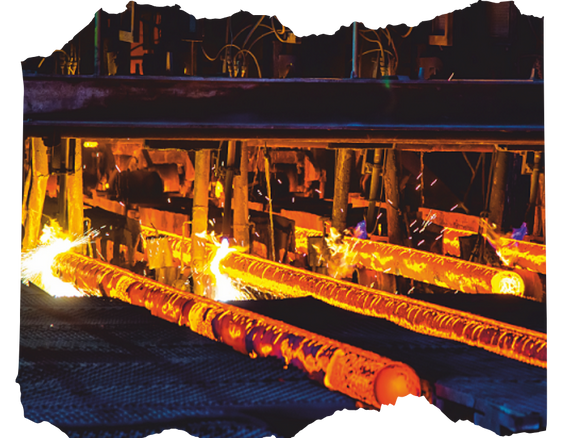
The manufacturing process begins with molten steel produced in a controlled steelmaking furnace. The liquid steel is refined to achieve the required chemical composition and cleanliness.
This molten steel is then cast into solid billets using continuous casting technology. These billets form the base material for TMT bar production.
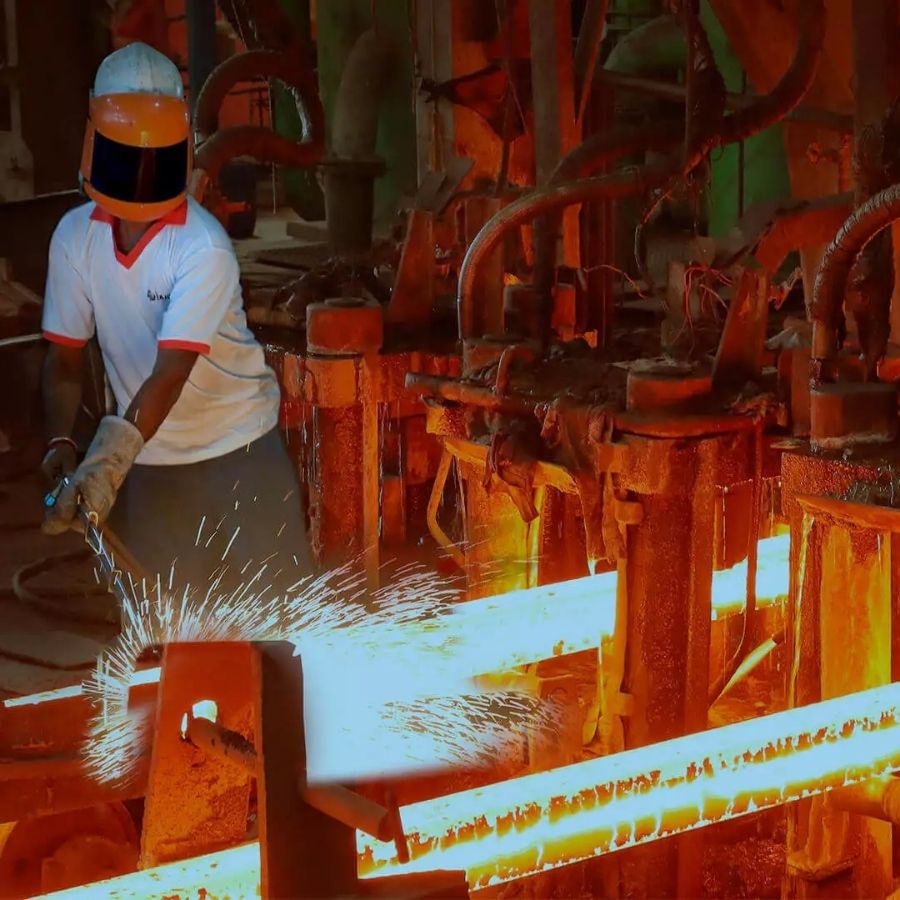
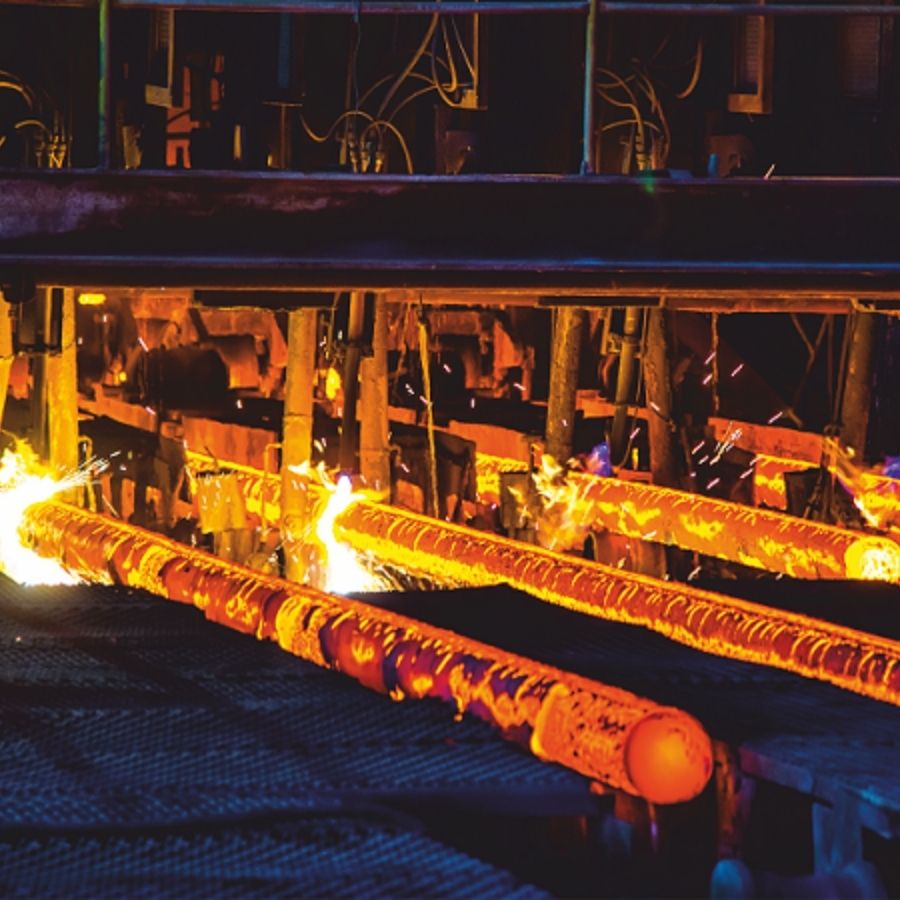
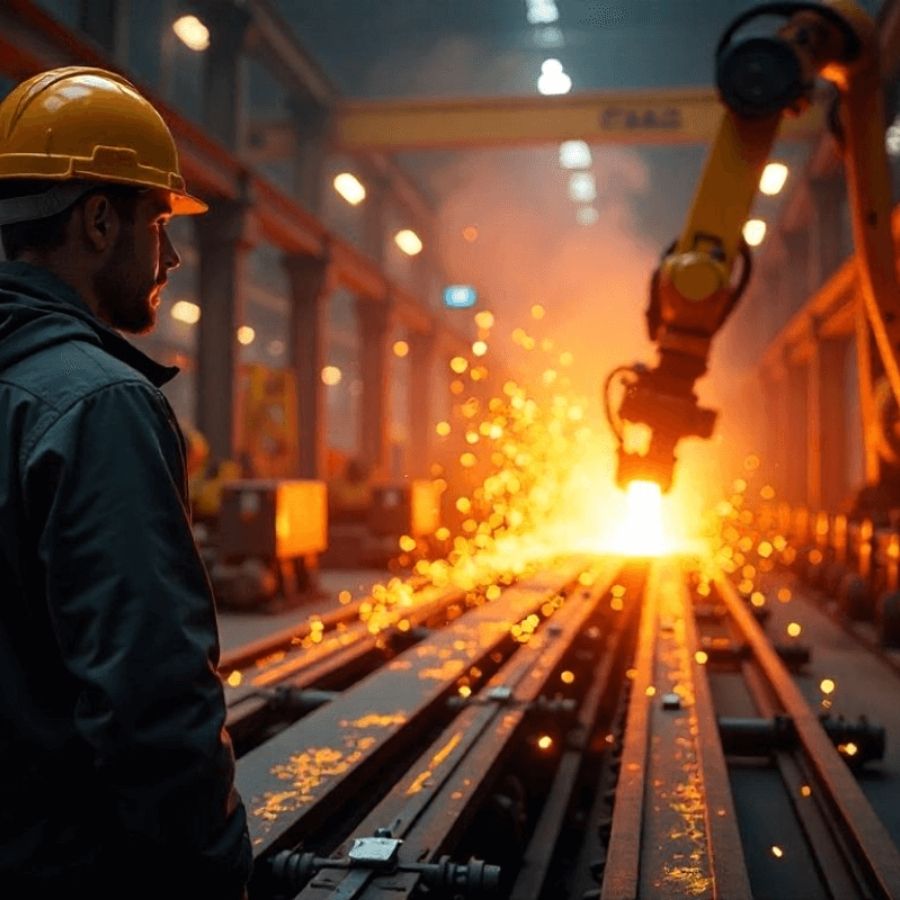
Billets are reheated uniformly in a furnace to make them suitable for hot rolling.
Heated billets pass through rolling mills to achieve the required bar diameter and rib pattern.
Hot rolled bars are rapidly cooled with water to form a hard outer surface.
The inner core retains heat, creating a ductile core with a strong outer layer.
TMT bars are cooled, straightened, and cut to standard commercial lengths.
Finished TMT bars undergo mechanical and dimensional testing before dispatch.
Unlike many manufacturers who start production from purchased billets, we begin our TMT manufacturing process at the foundation level — liquid steel. This complete in-house control allows us to deliver superior quality, consistency, and performance in every TMT bar.

We produce our own liquid steel, allowing strict control over chemical composition. This ensures consistent strength, ductility, and weldability in every TMT bar.
Since billets are cast in-house from molten steel, we eliminate variations commonly found in market-purchased billets.
Controlled metallurgy results in superior tensile strength, yield strength, elongation, and fatigue resistance.

Reliable performance for critical structures and load-bearing applications.

Superior corrosion resistance ensures durability for decades.

Every bar meets the same mechanical and dimensional standards.

Reduced maintenance and repair costs over the life of the structure.